
The quick answer
DIY roof cleaning is rarely as cheap as it looks once you count gear hire, safety equipment and the risk of falls, cracked tiles or a stripped coating. Working at height is the single biggest hazard, and the wrong pressure or chemicals can cause damage that costs far more than a professional clean. For most Brisbane homes, a pro is safer, better insured and usually better value than a weekend attempt.
Key takeaways
- Falls from height are the biggest and most serious DIY risk
- Too much pressure cracks tiles and strips protective coatings
- The wrong chemicals can damage the roof, plants and gutters
- Gear hire and safety equipment eat into any DIY saving
- A pro carries insurance and knows the method for each material
- Damage from a DIY clean often costs more than the clean itself
Cleaning your own roof looks like an easy way to save money, and sometimes it is. But the maths changes fast once you count the safety gear, the hire costs and the risk of doing real damage.
This is a safety-led look at DIY versus professional roof cleaning in Brisbane: what can go wrong, what it actually costs to do properly, and when it is genuinely smarter to hire someone.
The risk you cannot skip: working at height
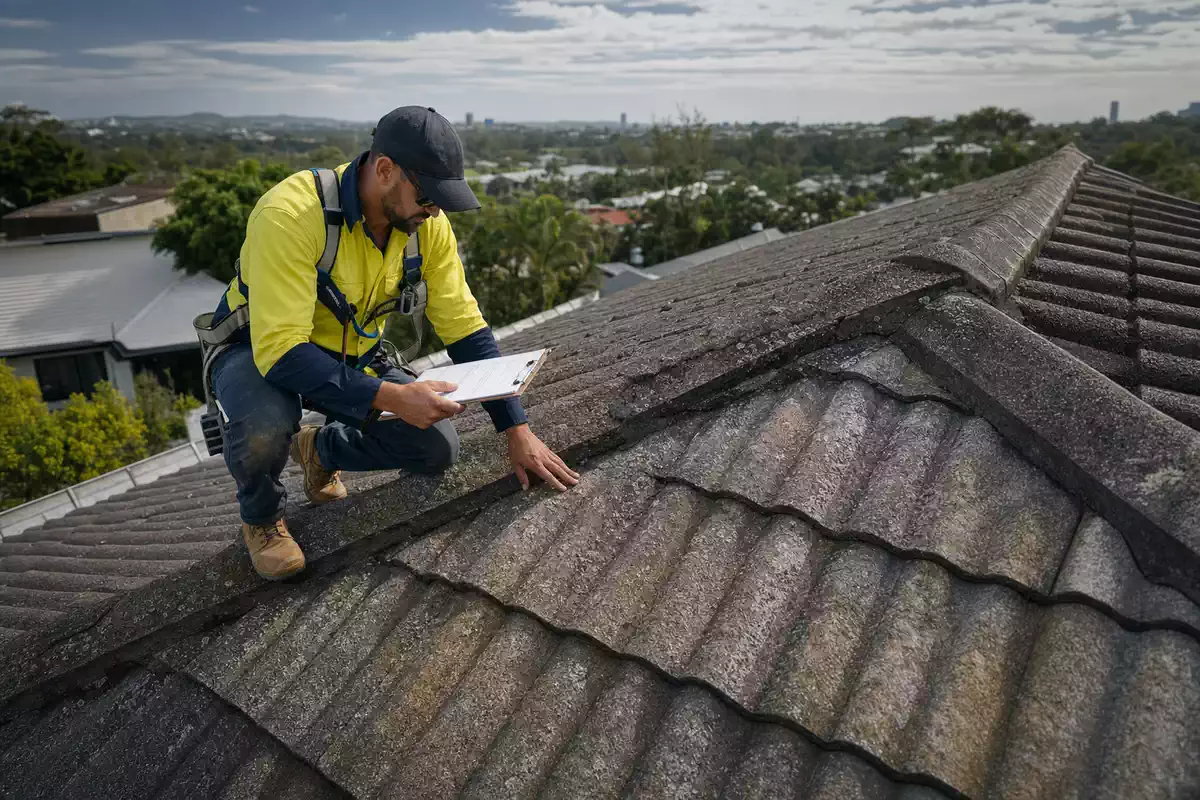
Before any talk of cost, this is the part that matters most. A roof is a wet, sloped, slippery surface, often two storeys up, and a fall from that height can be life-changing or worse.
Height is the real danger
Falls from ladders and roofs are among the most common serious home-maintenance injuries. No cosmetic result on a roof is worth a fall, and this is the single biggest reason to think hard before climbing up yourself.
Professionals manage this with harnessing, anchor points, the right ladders and experience moving on a roof. Doing it properly yourself means buying or hiring that same gear, and knowing how to use it.
The damage a DIY clean can cause
The second big risk is doing damage you then have to pay to fix. The most common mistake is reaching for a high-pressure washer and treating the roof like a driveway.
- Too much pressure cracks and chips tiles, especially older terracotta
- Blasting strips the protective coating that helps the roof shed water
- Water forced under tiles or sheets can find its way into the roof space
- Harsh or wrong chemicals stain the roof, burn plants and corrode gutters
This is why method matters more than muscle. A controlled soft wash lifts moss and algae at low pressure, protecting the surface rather than scouring it, which is the opposite of what most DIY pressure washers do.
The real cost of doing it yourself
The saving on a DIY clean is smaller than it first looks once you add up what you actually need to do it safely and correctly.
| DIY factor | What it really involves |
|---|---|
| Access gear | A suitable ladder, and often a harness and anchor setup for a two-storey roof. |
| Cleaning equipment | Pump or low-pressure sprayer, and the right roof-safe treatment, not just a hose. |
| Your time | A full day or more, plus the learning curve of a job you rarely do. |
| Risk of damage | One cracked-tile or stripped-coating mistake can outweigh the whole saving. |
| No insurance | If something goes wrong at height or on the roof, you carry it entirely. |
The often-overlooked costs behind a do-it-yourself roof clean.
DIY roof cleaning is only cheap if nothing goes wrong. The first cracked tile or slip changes the sum completely.
What a professional brings
A good operator is not just paying someone to do a job you could do yourself. You are buying the safety setup, the right method and the cover if something goes wrong.
- 01
Assessment first
The roof is checked for material, pitch and condition so the method suits it, rather than one blast for everything.
- 02
Right method, right pressure
Delicate roofs get a low-pressure soft wash, durable ones get more, so nothing is damaged.
- 03
Insured and licensed work
You can confirm a contractor's licence and insurance through the [Queensland Building and Construction Commission](https://www.qbcc.qld.gov.au/) before they start.
When DIY is fine, and when it is not
None of this means you can never touch your own roof. It is about matching the job to the risk honestly.
DIY can be reasonable when
- The roof is single-storey with safe, easy access
- The growth is light and you are only rinsing, not blasting
- You have proper footing, a stable ladder and someone spotting you
Call a professional when
- The roof is two-storey, steep or hard to access safely
- There is heavy moss, lichen or black algae to treat, not just rinse
- You have fragile terracotta tiles or a coated surface to protect
- You want the work insured, and a roof washing method matched to your material
If in doubt, stay off the roof
The most expensive DIY roof clean is the one that ends in an injury. If access is at all sketchy, or the roof is high or fragile, a free assessment costs nothing and keeps you on the ground.
Related services
 Call Now
 Free Quote