

The quick answer
Most Brisbane roofs benefit from a professional clean every one to three years, but the right interval depends on shade, trees, roof material and how close you are to the bay. Shaded, tree-lined and bayside roofs need cleaning sooner because they stay damp and grow moss and algae faster. The clearest guide is the roof itself: visible streaks, moss, lichen or lifting growth mean it is due, whatever the calendar says.
Key takeaways
- As a guide, most Brisbane roofs suit a clean every one to three years
- Shaded, tree-lined and bayside roofs usually need it sooner
- Visible black streaks, moss or lichen are the clearest signs it is due
- Cleaning after storm season clears debris and growth before summer humidity
- Regular light cleans cost less over time than one heavy restoration clean
It is a fair question, and the honest answer is that it depends on your roof rather than a fixed calendar rule. A shaded roof near the bay and a sunny roof on an open block do not age the same way.
That said, there is a sensible range for most Brisbane homes, along with clear signs that tell you it is due. Here is how to judge the timing for your own roof.
The general rule of thumb for Brisbane
There is no law that says clean your roof every X years, but experience across Brisbane's climate points to a workable range. For most homes, a professional clean every one to three years keeps growth under control.
Where you land in that range depends on your roof. A sun-exposed roof on an open block might stretch towards the longer end, while a shaded, damp roof may need attention closer to every year.
It is about the roof, not the calendar
Treat one to three years as a starting point, then let the actual state of your roof decide. A roof that is already streaking does not need to wait for a set date.
The signs your roof is due for a clean
Your roof will usually tell you before the calendar does. Walk to the far side of the street, look up, and check for these.
- Dark streaks or a grey-black film running down the slope, which is algae
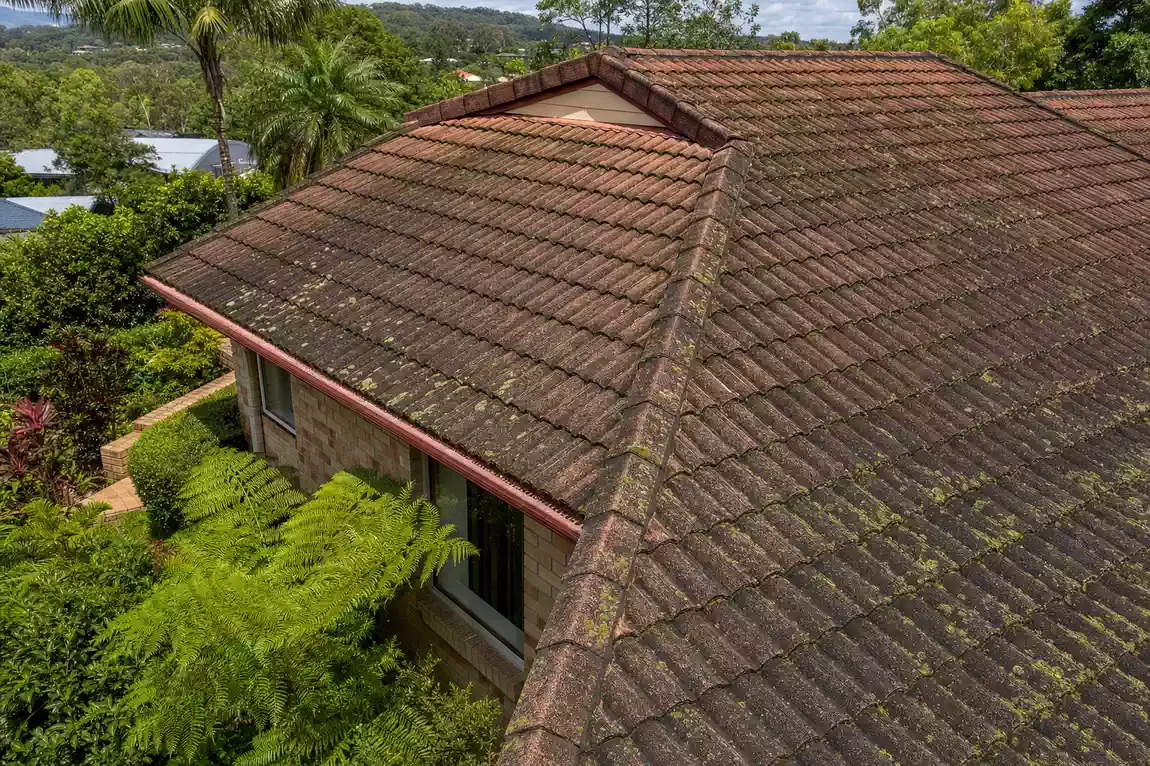
- Green moss cushions building up along tile overlaps and shaded edges
- Crusty grey-green lichen patches that grip the surface
- Debris, leaves and dirt collecting in valleys and low points
- Growth starting to lift or dislodge tiles
Book a look before you climb
You do not need to get on the roof to check. A [soft washing](/services/soft-washing/) specialist can assess it safely from a ladder or the ground and tell you whether it is genuinely due. It is worth confirming any contractor is licensed and insured, which you can check through the [Queensland Building and Construction Commission](https://www.qbcc.qld.gov.au/).
Why some roofs need cleaning sooner
Two identical homes can be on very different schedules. A handful of local factors decide which Brisbane roofs grow faster and need more frequent cleaning.
| Situation | Typical need |
|---|---|
| Shaded or tree-lined roof | Sooner. Stays damp longer and collects leaf debris that feeds moss. |
| Bayside or coastal | Sooner. Salt-laden humid air keeps the roof damp and speeds up growth. |
| Sun-exposed, open block | Longer. Dries quickly after rain, so growth is slower to take hold. |
| Low-pitch roof | Sooner. Holds water and debris longer than a steep roof that sheds it. |
| Recently treated roof | Longer. A proper soft-wash treatment slows regrowth for a good while. |
How local conditions change how often a Brisbane roof needs cleaning.
Shade and moisture are the deciders. The damper a roof stays, the faster it grows, and the sooner it is due.
Timing it around Brisbane's storm season
You get more value from a clean if you time it well. Brisbane's wet, stormy summers deliver both debris and the humidity that growth loves, so the shoulders of that season are the smart windows.
- 01
After storm season
Clearing storm debris, leaves and early growth in autumn stops it entrenching over the cooler months.
- 02
Before summer humidity
A clean going into the warmer months removes the growth that would otherwise explode through the humid wet season.
- 03
Pair it with gutter clearing
Combining a roof wash with gutter clearing in one visit is more efficient and protects against storm-season overflow.
Does roof material change the schedule?
It can, both in how often you clean and in how gently the job has to be done. The interval matters less than matching the method to the material.
Porous concrete and older terracotta tiles hold moisture and can grow faster than smooth, coated metal, so they may want checking a little more often. Whatever the surface, the safe method is a low-pressure clean rather than a harsh blast, which is where matched tile roof cleaning comes in.
Frequency is not an excuse for pressure
Cleaning more often does not mean cleaning harder. High pressure on terracotta or a coated roof can crack tiles and strip coatings, which only makes the next round of growth worse.
Regular, gentle cleaning almost always works out cheaper and kinder to the roof than leaving it for years and needing an intensive roof washing in Brisbane job to recover it.
Related services
 Call Now
 Free Quote