
The quick answer
Soft washing uses low pressure plus a biocide treatment to kill moss, lichen and algae at the root, so the roof stays clean longer and the surface is never at risk. Pressure washing uses high-force water to blast growth off, which is faster but can crack tiles, strip protective coatings and force water under laps. For most Brisbane tile and coated roofs, soft washing is the safer choice.
Key takeaways
- Soft washing kills growth at the root, so it stays cleaner for longer
- Pressure washing removes surface grime fast but does not kill spores
- High pressure can crack tiles, strip coatings and drive water under laps
- Soft washing suits fragile terracotta, coated metal and aged concrete
- A controlled rinse still has its place, but the method must match the roof
Soft washing and pressure washing get used as if they mean the same thing, but they are two very different ways to clean a roof.
One relies on gentle chemistry to kill growth at the root. The other relies on force. Choosing the wrong one can leave you with a roof that looks clean for a season, then stains straight back or, worse, ends up damaged. Here is how to tell them apart.
What each method actually does
The two methods solve the same problem in opposite ways. Understanding the difference is the whole point, because it decides whether your roof is treated or just blasted.
Soft washing
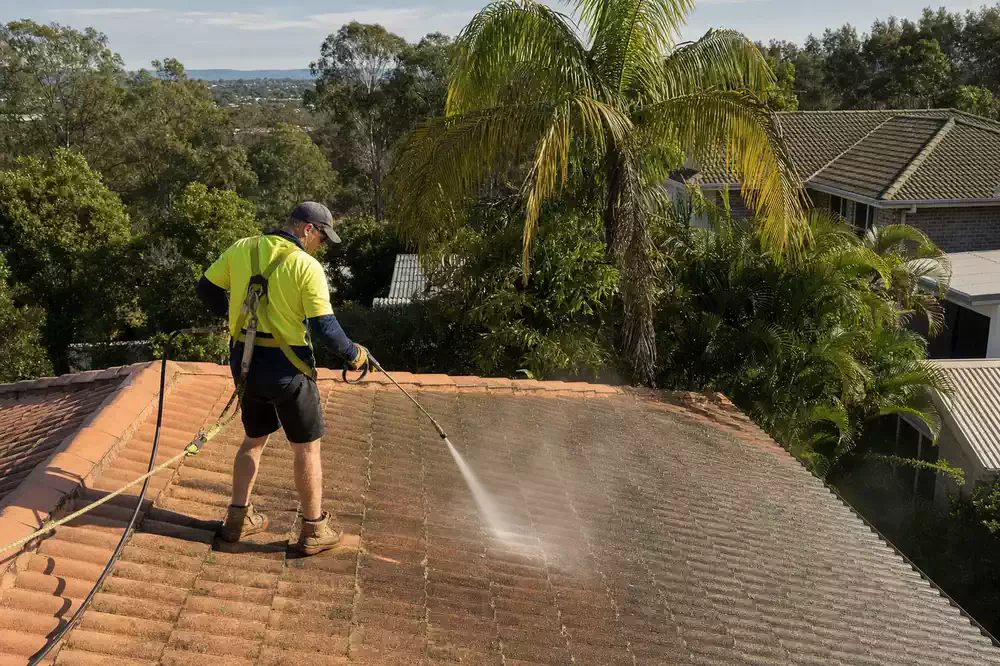
Soft washing applies a low-pressure treatment that kills moss, lichen and algae at the root. The dead growth then weathers away over the following weeks, leaving the surface undisturbed.
Pressure washing
Pressure washing uses a high-force stream of water to physically strip growth and grime off the surface. It looks dramatic and works quickly, but it only removes what it can see and does nothing to the spores left behind.
The key difference
Soft washing treats the cause. Pressure washing treats the symptom. That single distinction is why one result lasts and the other often does not.
Soft washing vs pressure washing at a glance
Side by side, the trade-offs become clear. Neither is universally better, but for the roofs most Brisbane homes have, one carries far less risk.
| Consideration | Soft washing | Pressure washing |
|---|---|---|
| Pressure used | Low, roof-safe | High, forceful |
| Treats growth at the root | Yes | No |
| Risk to tiles and coatings | Low | High if misapplied |
| How long results last | Longer, growth is killed | Shorter, spores remain |
| Best for | Terracotta, coated metal, aged concrete | Durable, robust surfaces only |
How the two roof cleaning methods compare on the things that matter.
Notice that pressure washing is not banned outright. On a robust surface with the pressure carefully controlled it has a role, but the roof has to be able to take it.
Why high pressure can damage a roof
High pressure feels thorough, but it is exactly that force that causes the problems. The damage is often invisible on the day and only shows up later.
- It can crack or chip brittle terracotta and older concrete tiles
- It strips the protective glaze or factory coating that keeps a roof weatherproof
- It can force water up under laps and ridge caps, causing leaks
- On Colorbond and coated steel it can wear the paint layer, inviting oxidation
The hidden cost
A stripped coating or a hairline crack does not look like damage straight away. You often only find out when the roof stains back fast or a leak appears months later.
Why soft washing lasts longer
The reason soft washing outlasts a pressure clean comes down to biology. Moss, lichen and black algae grow from spores rooted into the surface.
- 01
Apply the treatment
A roof-safe biocide is applied at low pressure and left to work into the growth.
- 02
Kill it at the root
The treatment kills the moss, lichen and algae down to the spore, not just the top layer.
- 03
Let it weather clear
Over the following weeks the dead growth breaks down and washes away with the rain.
Blasting moss off only clears what you can see. If the spores survive, the stain comes straight back.
Which method is right for your roof
The honest answer is that the roof decides, not the price list. A good operator looks at your material, its age and its condition before choosing.
For the terracotta, concrete tile and Colorbond roofs common across Brisbane, a roof wash built around soft washing is usually the safer, longer-lasting choice. A controlled rinse may be added where a surface can handle it, but never as a blunt one-size-fits-all blast.
The peak of Queensland's storm season also matters here. The Bureau of Meteorology notes Brisbane's warm, humid summers, and that damp is exactly what feeds the moss and algae a soft wash is designed to kill off. For general home maintenance guidance, Master Builders Queensland is a useful independent starting point.
Ask before you book
Ask any operator which method they will use and why. If the answer is high pressure on every roof regardless of material, that is a warning sign.
Related services
 Call Now
 Free Quote