
The quick answer
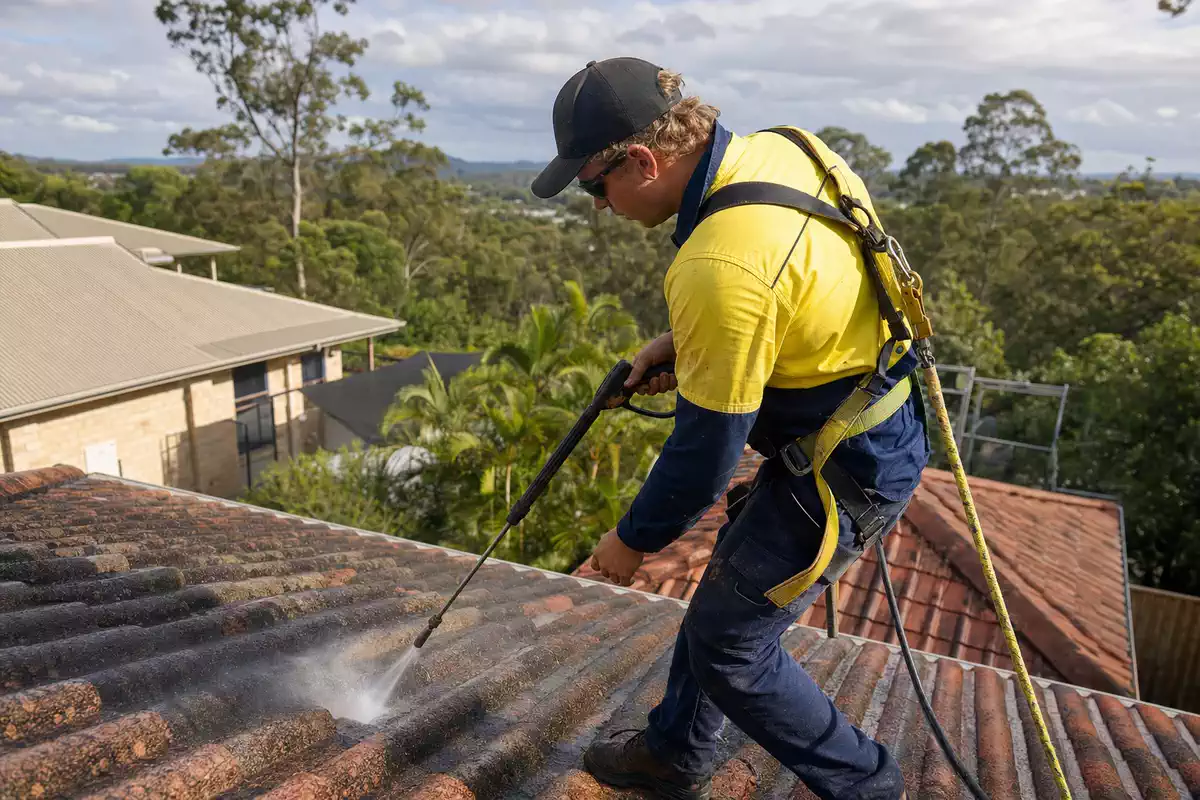
Terracotta and concrete tiles need different cleaning because they differ in porosity, coating, fragility and how they age. Terracotta is fired clay that can be glazed or unglazed and grows brittle with age, while concrete tiles carry a surface coating that fades and chalks over time. Both are best cleaned with low-pressure soft washing, and both often need ridge cap and repointing checks while the roof is being worked on.
Key takeaways
- Terracotta is fired clay, glazed or unglazed, and grows brittle with age
- Concrete tiles carry a surface coating that fades and chalks over time
- Porosity and coating decide how much moss holds and how it is treated
- Both suit low-pressure soft washing over harsh high-pressure blasting
- Ridge caps and repointing are worth checking while the roof is cleaned
From the footpath a tile roof is a tile roof, but terracotta and concrete tiles are made and behave very differently.
That difference matters the moment someone starts cleaning. The porosity, the coating, the age and the fragility of the tile all change what is safe to do. Get it wrong and you can strip a finish or crack a tile. Here is how each one should be treated.
How terracotta and concrete tiles differ
The two materials start life differently, and that shapes everything about how they should be cleaned. Knowing which you have is the first step.
Terracotta tiles
Terracotta is fired clay. It can be glazed, which gives a sealed, water-shedding surface, or unglazed, which is more porous and holds growth more readily. Older terracotta becomes brittle and needs a careful hand.
Concrete tiles
Concrete tiles are moulded from a cement mix and finished with a surface coating that gives them their colour and weather resistance. Over the years that coating fades, chalks and wears thin, which changes how they take to cleaning.
Why it matters
Porosity and coating decide how much moss and lichen a tile holds and how gently it must be treated. Terracotta and concrete are not interchangeable, even on the same street.
Terracotta vs concrete at a glance
Laid side by side, the differences that affect cleaning become clear. This is what an operator is reading before they choose a method.
| Property | Terracotta | Concrete |
|---|---|---|
| Made from | Fired clay | Moulded cement mix |
| Surface | Glazed or unglazed | Coated for colour and weather |
| Porosity | High if unglazed, low if glazed | Moderate, rises as coating wears |
| Ages by | Becoming brittle | Fading, chalking, coating loss |
| Cleaning care needed | High on older, brittle tiles | High once the coating is thin |
The tile properties that decide how each roof should be cleaned.
Why the cleaning method changes
Because the materials differ, the same method does not suit both, and it certainly does not suit both at every age. Matching the approach to the tile is the difference between a clean roof and a damaged one.
- Brittle older terracotta cannot take high pressure without risking cracks
- Unglazed terracotta holds more growth, so it needs a thorough root-level treatment
- Concrete with a worn coating is easily marked or eroded by force
- Both benefit from soft washing that kills growth at the root without abrasion
The high-pressure trap
Blasting either tile at high pressure can crack the surface, strip a coating or a glaze, and force water under laps. What looks fast on the day can cost far more later.
Ridge caps and repointing
A tile roof is more than the tiles. The ridge caps that run along the peaks are bedded and pointed with mortar, and that mortar does not last forever.
Cleaning the roof is the ideal time to check this, because the operator is already up there and the surface is clear to inspect.
- 01
Inspect the ridge line
Check the ridge caps and mortar for cracking, gaps or loose sections while the roof is being cleaned.
- 02
Flag repointing needs
Perished pointing lets water in and lets caps shift, so note anything that needs attention.
- 03
Plan any repairs
Repointing or re-bedding is best sorted before it becomes a leak, and pairs neatly with a clean.
The tiles get the attention, but it is the ridge line and its pointing that most often lets a tile roof down.
Getting it right for your tile
If you are not sure whether you have terracotta or concrete, that is fine. A good operator will identify it on site and set the method to match the material and its age.
The safe default for both across Brisbane is a low-pressure tile roof clean that lifts moss and lichen without touching the surface, paired with a quick check of the ridge caps while the roof is up for inspection.
If repointing or re-bedding is flagged, it is worth using a licensed roofer, and you can check a contractor's licence through the Queensland Building and Construction Commission. Tile makers such as Monier also publish care notes specific to their concrete and terracotta profiles.
Know your material
Telling your operator whether the roof is terracotta or concrete, and roughly how old it is, helps them quote and treat it accurately the first time.
Related services
 Call Now
 Free Quote